Great route from east to west in the north of Extremadura
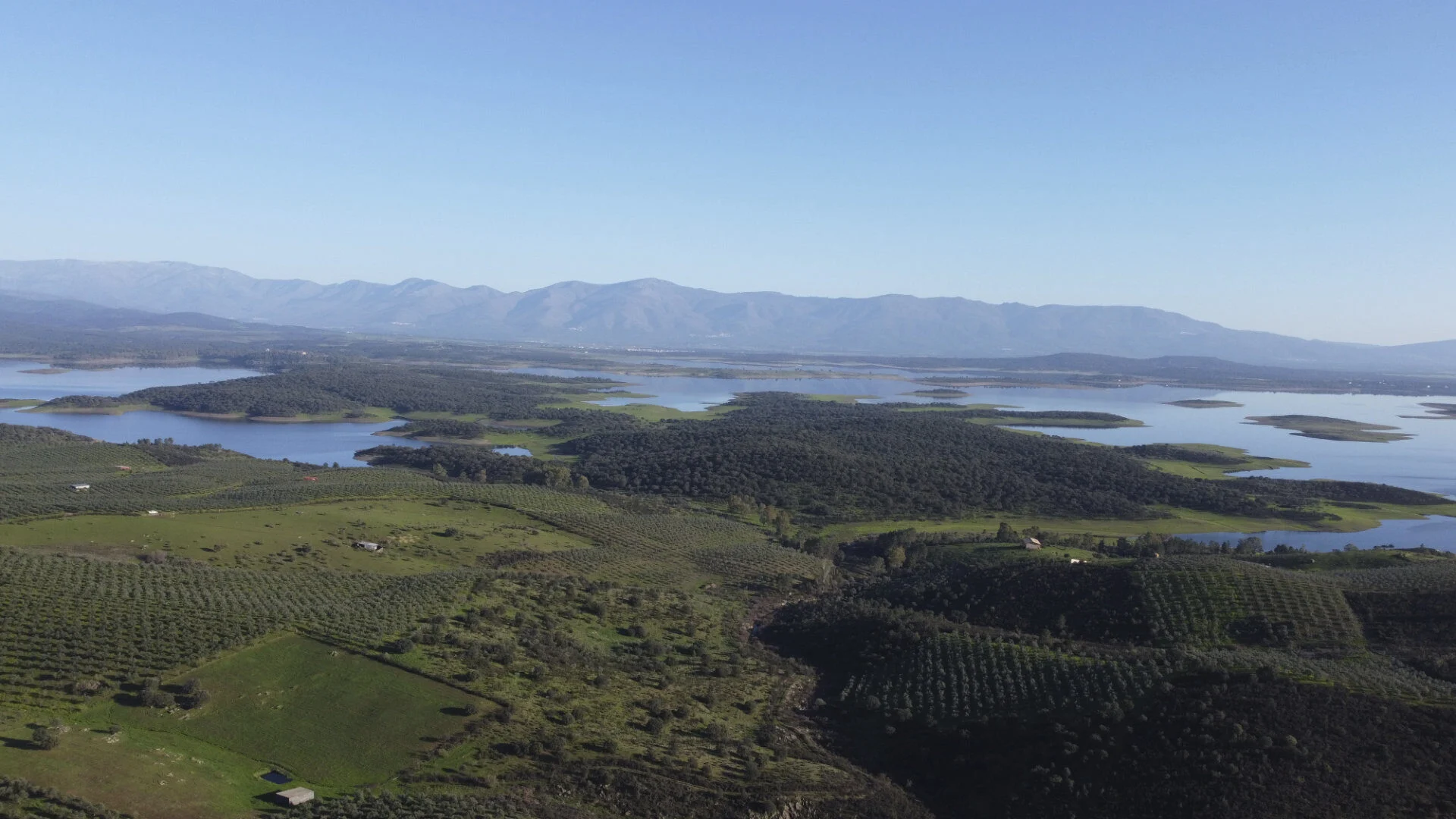
Discover Villuercas-Ibores-Jara, Monfragüe National Park, El Valle del Alagón and Tajo Internacional, an ideal route to travel by motorcycle or car. They are small and winding roads in a majestic geological viewpoint. From Casa Rural Villabellosa, an ideal accommodation for a great rest after touring this biosphere reserve landscape.
Either by car, on a motorcycle or in the company of our professionals (origennaturaleza –idhunatours – Jalama outdoor) that offer guided routes in Villuercas-Ibores-Jara, Monfragüe National Park, El Valle del Alagón and Tajo Internacional. Casa Rural Villabellosa, due to its location in Villar de Plasencia next to the Ruta de la Plata highway, is the perfect place to plan a getaway and discover what you don’t expect to find, Extremadura from east to west.
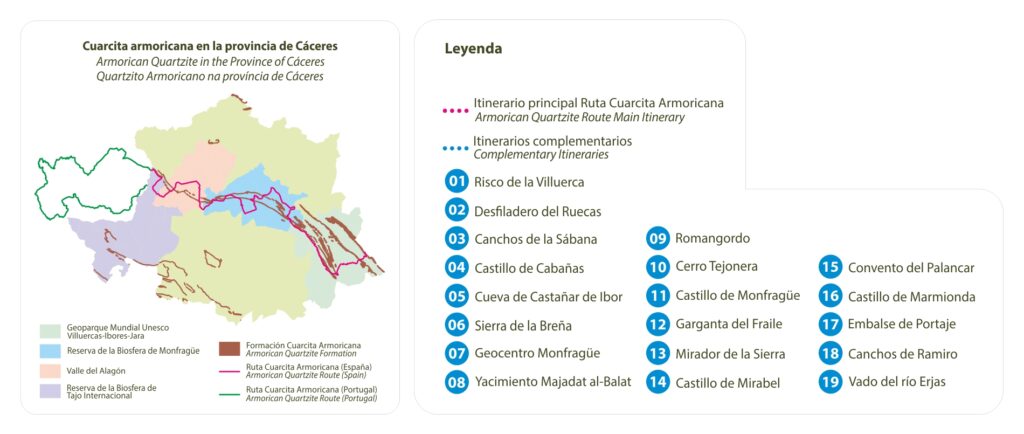
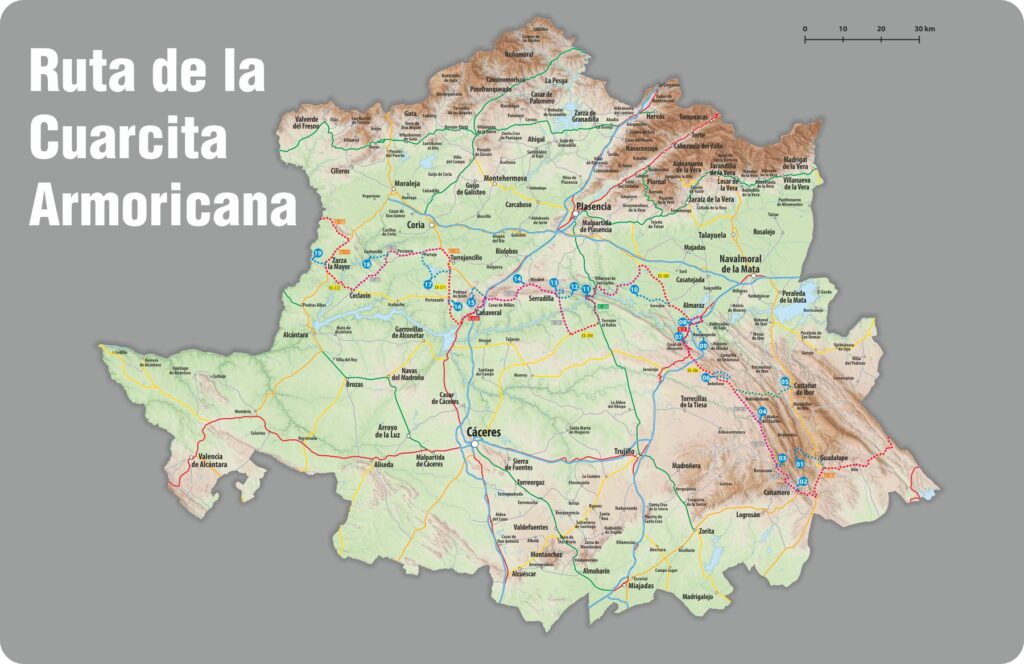
Itinerary through the arc that the Armorican Quartzite Formation describes from east to west through the province of Cáceres, between the Villuercas-Ibores-Jara Geopark and the Portuguese border, already in the Tajo Internacional Biosphere Reserve, passing through the Monfragüe Biosphere Reserve and the Alagón valley. Designed to be practiced by vehicle, to its 320 km there are 19 complementary itineraries with a total of 108 km – mostly pedestrian – that propose visits of geological, heritage or environmental interest. The route lacks directional signage; The QR code that you will find on this website allows you to access the download of your track to follow it on your mobile or device with GPS. The route also continues in Portuguese territory, with a circular itinerary of about 325 km that reaches the Naturtejo Geopark.
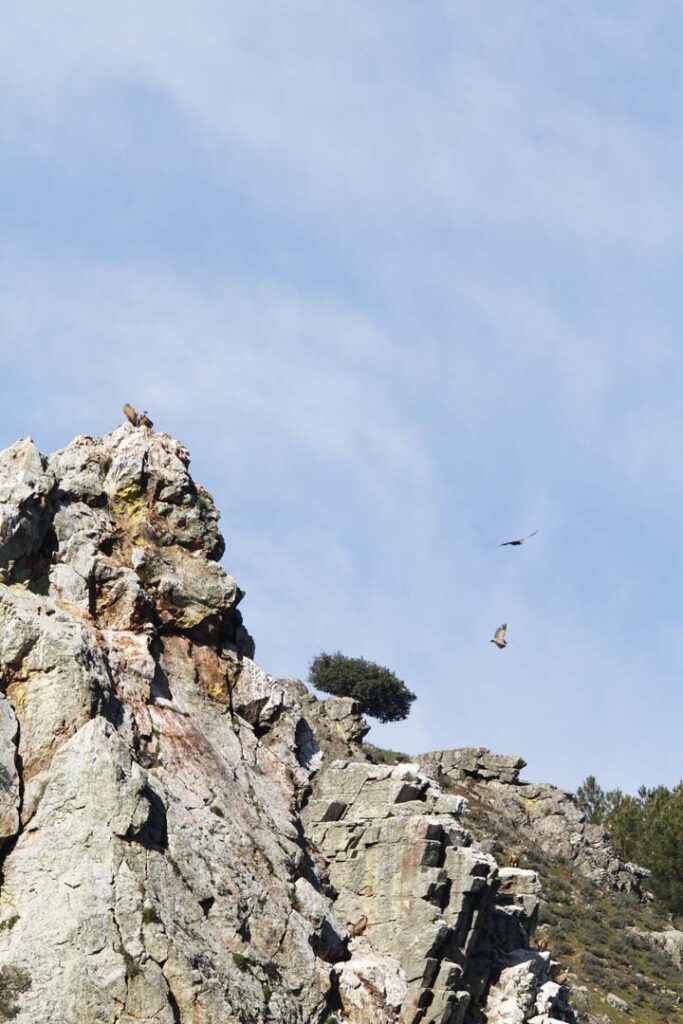
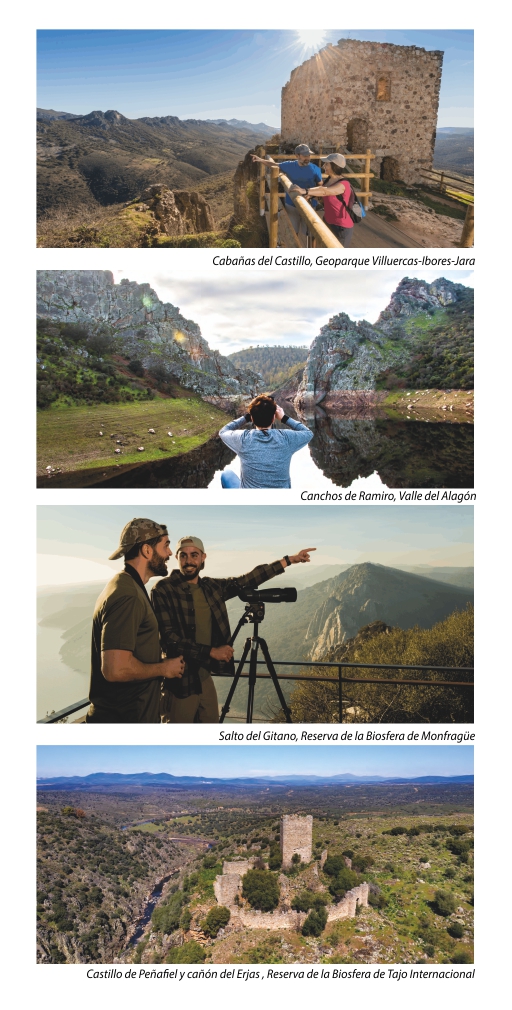
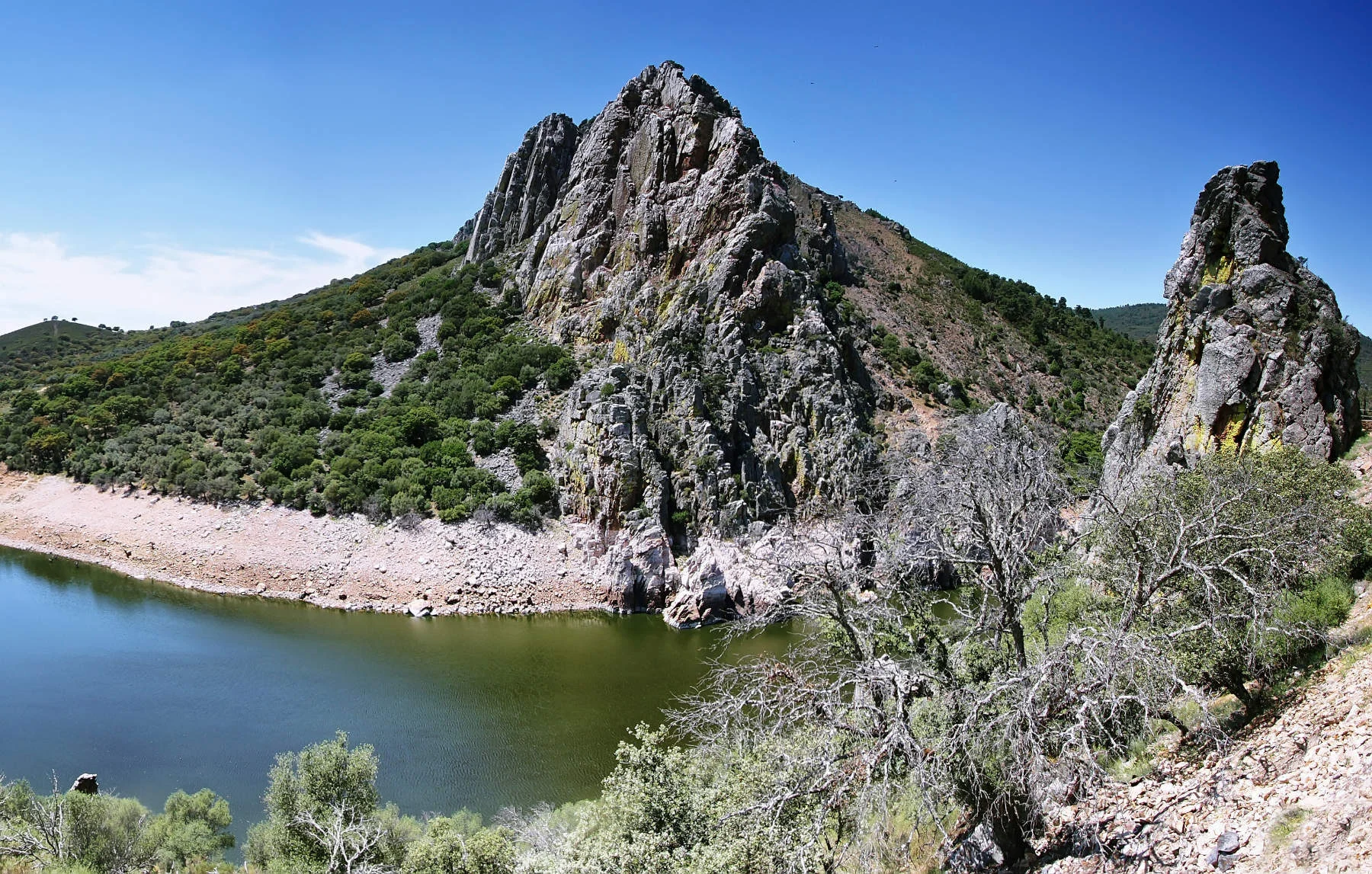
The Armorican Quartzite Formation includes some of the most unique rocks in the center and south of the province of Cáceres, as it is the main component of its relief and its most abrupt morphological highlights. They are mainly sand sediments generated during the Early Ordovician (480 million years ago; Ma) – at a time when a major marine transgression took place and this region was once again invaded by the sea – later converted into compact rocks (lithification) and subsequently folded and fractured during the Hercynian orogeny (time of mountain formation) in the early Carboniferous (350 Ma). Erosion did the rest, affecting the different rocks unequally according to their resistance, which in the case of quartzite is superior to the others; Its vertical reliefs are not only spectacular but they are authentic “living rocks”, since in addition to numerous fossil evidences (especially Cruciana and Daedalus) they house some of the most diverse and unique faunal or botanical communities in Europe, characterized by the presence of large birds of prey and excellent samples of Mediterranean forest and scrub.